 Quality Assurance Cihan University – Erbil
Related Articles
Cihan University–Erbil
Academic Year 2024–2025
- Overview
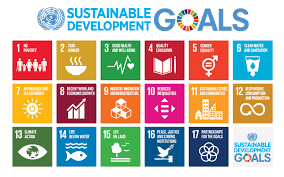
During the academic year 2024–2025, Cihan University–Erbil demonstrated a strong commitment to academic engagement and sustainable development through the organization of seminars across its academic departments. A total of 142 seminars were conducted university-wide, attracting 1,962 participants. Of these seminars, 132 activities were explicitly aligned with the United Nations Sustainable Development Goals (SDGs), highlighting the university’s strategic integration of sustainability into academic and community-focused initiatives.
- Seminar Distribution by Department
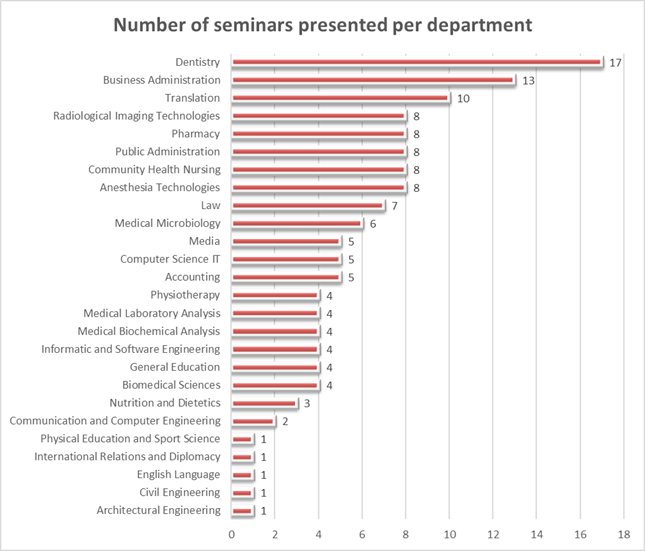
Seminars were organized across a wide range of academic departments, reflecting interdisciplinary engagement. The Department of Dentistry (DDEN) recorded the highest number of seminars (17 seminars) with a total attendance of 189 participants, and all seminars supported SDG-related objectives. The Department of Business Administration (DBAD) followed with 13 seminars and 157 attendees, fully aligned with SDGs.
Other departments with high levels of activity include:
- Translation (DTRN): 10 seminars, 141 attendees
- Radiology and Imaging Technology (DRIT): 8 seminars, 76 attendees
- Anesthesia Technology (DANT): 8 seminars, 81 attendees
- Public Administration (DPAD): 8 seminars, 108 attendees
- Community Health Nursing (DCHN): 8 seminars, 123 attendees
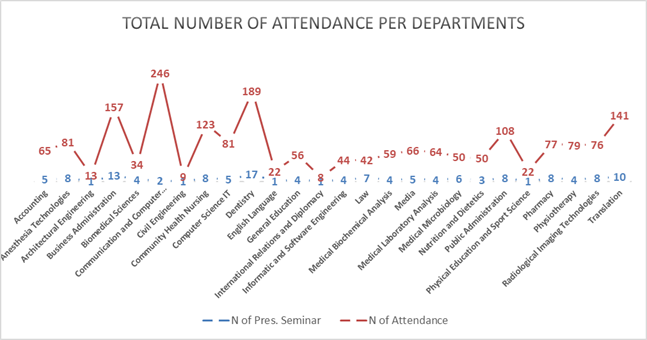
In contrast, some departments organized fewer seminars but achieved high attendance impact. Notably, the Department of Communication and Computer Engineering (DCCE) hosted only 2 seminars yet recorded 246 participants, indicating a very high average attendance per seminar and strong audience engagement.
- Attendance Analysis
Overall attendance figures suggest strong participation across departments, with an average of approximately 13.8 participants per seminar. Departments varied in engagement strategies, with some prioritizing frequent specialized seminars and others hosting fewer, high-impact events. This variation reflects flexibility in addressing departmental needs and audience interests.
- SDG Alignment and Distribution
Out of the total seminars conducted, 132 activities were aligned with SDGs, demonstrating a high level of intentional integration of sustainability themes.
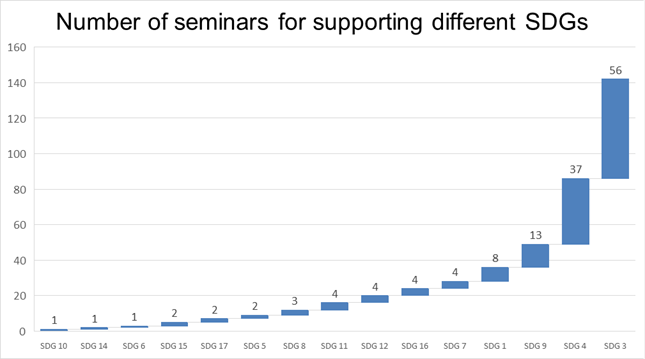
SDG-wise Distribution
- SDG 3 (Good Health and Well-Being): 54 activities (40.9%)
- SDG 4 (Quality Education): 35 activities (26.5%)
- SDG 9 (Industry, Innovation and Infrastructure): 13 activities (9.8%)
- SDG 11 (Sustainable Cities and Communities): 4 activities
- SDG 12 (Responsible Consumption and Production): 4 activities
Other SDGs—including SDG 6, SDG 7, SDG 14, SDG 15, SDG 16, and SDG 17—were represented with fewer activities, ensuring broad but uneven coverage across the SDG framework.
Combined, SDG 3 and SDG 4 account for 67.4% of all SDG-related activities, underscoring the university’s strong focus on health and education.
- Departmental Contribution to SDGs
Several departments demonstrated leadership in SDG engagement:
- Dentistry (DDEN): 17 SDG-related activities
- Business Administration (DBAD): 13 activities
- Translation (DTRN): 10 activities
- Radiology and Imaging Technology (DRIT): 8 activities
- Anesthesia Technology (DANT): 8 activities
Health-related departments collectively contributed the majority of activities under SDG 3, reflecting strong alignment between disciplinary focus and sustainability priorities. Other departments contributed across multiple SDGs with fewer activities per goal, indicating diversification rather than volume-driven engagement.
- Ratios and Balance Analysis
- The ratio of health-focused SDGs (primarily SDG 3) to environment-focused SDGs (SDG 6, 7, 14, 15) is approximately 9:1, indicating a strong emphasis on health-related themes.
- The ratio of education-related activities (SDG 4) to partnership-related activities (SDG 17) is 35:2, reflecting limited emphasis on international collaboration.
- The average number of SDG activities per department is approximately 4.3, though distribution remains uneven across departments.
- Key Findings
- The majority of seminars were intentionally designed to support SDGs.
- Health and education dominate SDG engagement across the university.
- Departments demonstrate varied engagement strategies in terms of seminar frequency and audience reach.
- Environmental and partnership-related SDGs remain underrepresented.
- Conclusion
Overall, the seminar activities conducted during the 2024–2025 academic year highlight Cihan University–Erbil’s strong institutional commitment to sustainable development, academic outreach, and community engagement. The university demonstrates clear strengths in health- and education-related SDGs, supported by high levels of departmental participation and audience attendance. At the same time, the data reveal strategic opportunities to expand future activities toward underrepresented environmental and partnership-focused SDGs, thereby achieving a more balanced and comprehensive contribution to the United Nations SDG agenda.